
choosing the right land for your dream home
When it comes to building your dream home, choosing the right piece of land is crucial. You may have a general area in mind, but it’s important to dig into the more of the specifics before you commit.
Some parcels of land come with restrictions, while others are largely unrestricted. In simple terms, this often shows up as properties governed by homeowners associations versus those without them. But beyond the idea of an HOA, there are often additional layers to understand, including design review boards and neighborhood covenants, and zoning.
A Design Review Board, sometimes referred to as a DRB, is typically responsible for reviewing and approving the exterior design of a home to ensure it aligns with the character and guidelines of a neighborhood. Covenants outline what is and is not permitted on a property, ranging from architectural style and massing to materials, rooflines, and overall appearance.
Understanding whether a property is subject to these types of restrictions before purchasing can make a significant difference in the design process. It’s not about right or wrong, but about knowing what kind of framework you’re stepping into and whether it aligns with the home you hope to build.


II. zoning + variances
Beyond neighborhood guidelines and design review boards, zoning and easements also play a major role in shaping what can actually be built on your piece of land.
Zoning regulations establish how a property can be used and influence things like building height, setbacks from property lines, lot coverage, and overall scale.
These requirements vary by location, which is why understanding the specific zoning designation of a lot early on is so important.
In some cases, a property’s zoning may not fully align with your visions. While variances (special approvals) are sometimes possible, they are never guaranteed and often introduce additional time, cost, and uncertainty. Because of this, it’s helpful to approach land selection with a clear understanding of what is realistically achievable within the existing framework, rather than assuming flexibility later in the process.
iii. easements + surveys
Equally important are easements and property boundaries, which are typically documented through a plat or land survey.
A survey provides a clear picture of a property’s size, shape, and legal boundaries, while also identifying easements, encroachments, or other site conditions that may not be obvious during a casual visit. These elements directly affect where a home can be placed, how it is accessed, and how it interacts with the surrounding site.
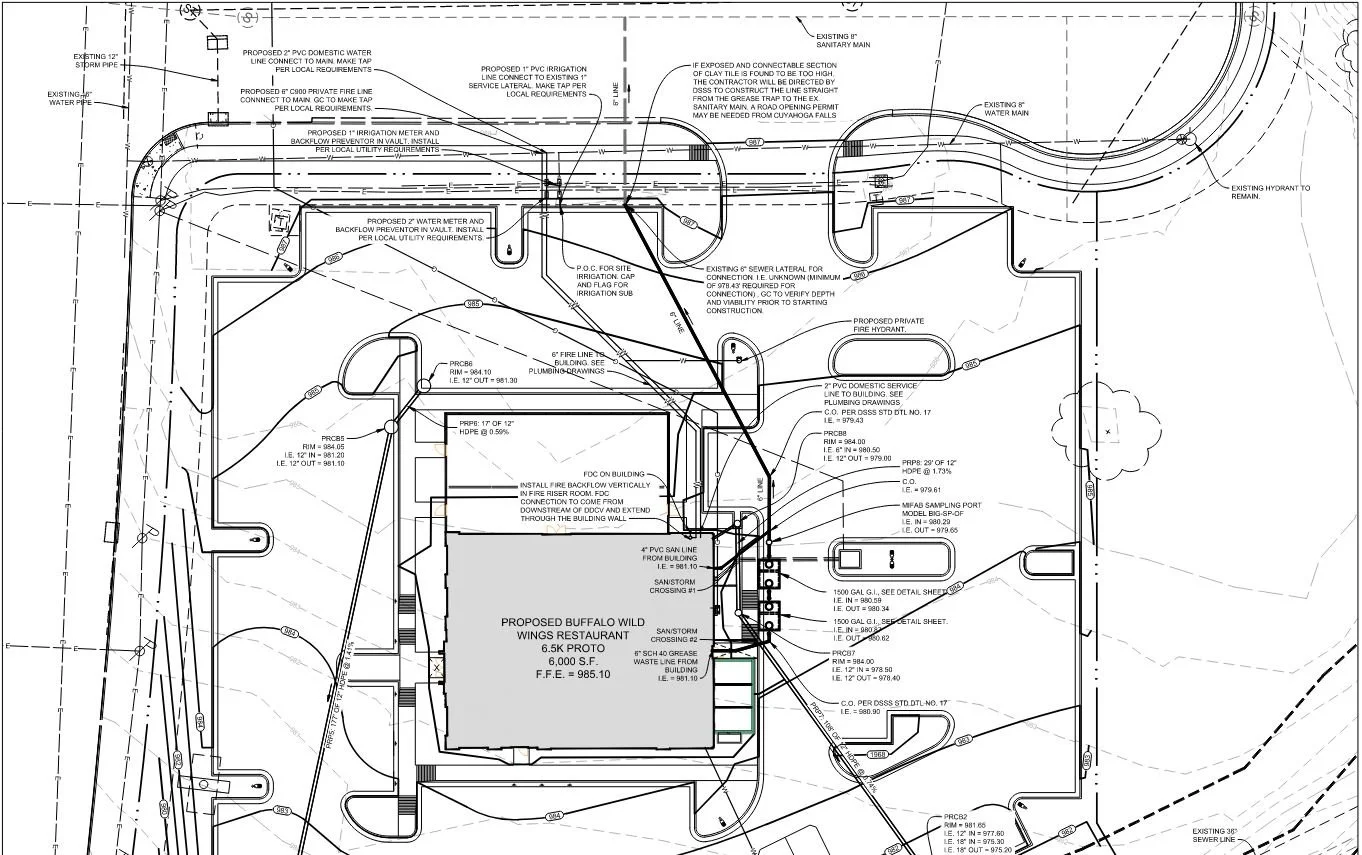
While we’ll talk more about engineers and technical drawings later in this series, it’s worth noting that, as the homeowner, you will typically be responsible for providing your builder or architect with a civil drawing, plat, or survey. These documents are used to properly site (locate) your home on the property, help define soil types, drainage patterns, and overall site feasibility. these items, in turn, influence foundation type, massing, entry points, and how the home ultimately sits within the landscape.
If these drawings already exist, the time of purchase is a great opportunity to ask your realtor or seller for them. Having this information early allows design decisions to respond thoughtfully to the realities of the site, rather than requiring adjustments later. It also provides a clearer understanding of long-term considerations, including how future zoning changes or nearby development could influence the property over time.
If you’re looking to build in the coastal South Carolina region and need a trusted realtor, I’m always happy to help point you in the right direction. Having the right team early on can make a meaningful difference in the process.
in my early experience:
we had a client who purchased a piece of land in a new, up-and-coming neighborhood. The surrounding communities and homes featured contemporary, coastal architecture. naturally it would be assumed that a similar approach could be used for their home.
after purchasing the lot, the clients came to us with fun, contemporary ideas for the exterior of their home and a sprawling floor plan.
early on in the process, we realized the neighborhoods drb would only approve more traditional styles and simple massing’s. This conflicted with the client original vision.
UNFORTUNATELY, This meant they had to readjust their expectations. Instead of the contemporary home they had imagined, the exterior design became more simplified, which also affected the interior layout. While the home still functioned well, it was no longer the dream home they had envisioned. They were forced to compromise, not because of budget or function, but because of restrictions they were unaware of prior to purchasing the lot.
And that’s exactly what we want to avoid! As I mentioned previously, my mindset is that you shouldn’t have to compromise on your dream home. If a specific location or neighborhood is important, it’s helpful to understand early on which elements are non-negotiable and which aspects you’re willing to adjust. That clarity can make all the difference.
All of this is to say, understanding your lot and any neighborhood guidelines before purchasing is essential. These should be conversations you’re comfortable having with your HOA, realtor, and design team.
previous BLOG POST: CHOOSING between stock home plans or a custom home
NEXT BLOG POST: CHOOSING between stock home plans or a custom home
