
hiring an architect vs. purchasing a stock plan : what should you choose?
So you’ve reached the point of deciding how to design your home. At this stage, there are a few different paths you can take.
It’s an important decision, but one that doesn’t need to feel overwhelming. There’s no universal “right” answer.
The choice depends on: your site, your priorities, your timeline, and how much customization you truly need.
Understanding the differences between these options early can help you move forward with clarity and confidence, rather than second guessing every decision along the way.
There are many factors to consider when deciding whether to work with an architect on a custom home or start with a stock plan. Both approaches have their advantages, and both come with trade-offs.
This guide will help lay out the key differences to help you make an informed decision that aligns with your goals, budget, and expectations.
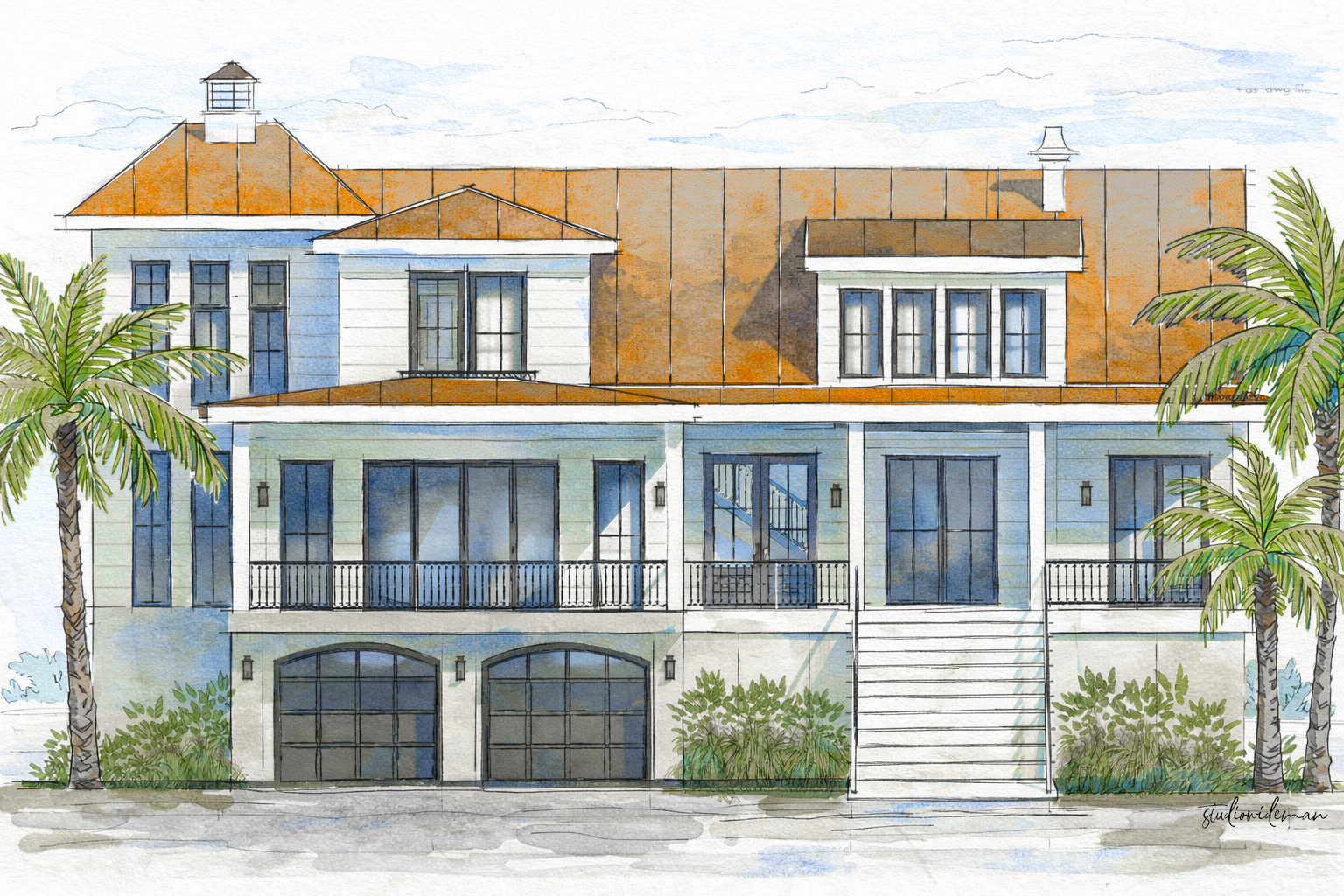
studiowideman: sullivans collection
hiring an architect
site + lifestyle:
hiring an architect is great if you want a designed specifically for you, your site, and your way of living. An architect’s job is to considers everything from topography and to your daily routines and long-term adaptability.
This work happens early in the schematic design phase, where the focus is on spatial relationships and how the home functions as a whole. The result is a plan that reflects how you live and how the house engages with its surroundings.
A key benefit of hiring an architect is the ability to respond to vernacular. Architecture is more than a home, it’s how space supports daily life. When done well, there’s a quiet exchange between the house and the people living in it, resulting in a home that feels intentionally shaped by its place.
timeline
Working with an architect typically involves a longer upfront timeline. The design process includes (3) three phases: schematic design, design development, construction drawings. This allows time for exploration, refinement, and coordination, resulting in a home that is carefully tailored to the site and the homeowner’s needs. While this approach requires patience, it often leads to fewer surprises later in the process.
Depending on the architect, the size and complexity of the home, the number of revisions, and the level of detail in the drawings- each design phase can range from four to twelve weeks. From early schematic design through construction documents, a fully custom home typically requires several months of design, with the overall process often spanning around four to six months before construction begins.
cost
Most residential architects structure their fees either as a percentage of construction cost or on a per–square-foot basis.
To give a general sense of scale, a custom home in the range of 5,000 square feet may see architectural fees starting around the mid–five figures range, with costs increasing based on complexity, level of detail, site conditions, geographic market, and overall scope of services.
A typical architectural scope includes the full design process, from early conceptual studies through construction drawings, as well as coordination with consultants such as structural engineers. Civil engineering and landscape design are often consulted separately by the owner, depending on the project and jurisdiction.
Additional services outside the original scope, such as significant design revisions or expanded coordination, are typically billed separately.
If you’re interested in working together on a custom home, I’m always happy to provide a project-specific quote based on your site, scope, and goals.
purchasing a stock plan
site + lifestyle:
A stock plan offers a thoughtfully designed starting point, often based on proven layouts that work well for a wide range of lifestyles. These plans prioritize efficiency, clarity, and functionality, making them a great option for straightforward sites or homeowners who resonate with an existing layout.
Because stock plans are designed without a specific site in mind, they typically require adaptation to respond to topography, orientation, and local conditions. With the right adjustments, a stock plan can still support your lifestyle, but it relies more on modification than on design shaped from the ground up.
timeline
Stock plans generally offer a shorter timeline at the front end of a project. Because the core design is already established, homeowners can move more quickly into pricing, permitting, and construction.
That said, most stock plans are architectural in nature and often require review and approval by a local professional before permitting. structural engineering approval is typically required for stock plans. Structural engineers are responsible for sizing members and confirming that the design meets local code requirements, unless this information is explicitly included in the plan set.
(depending on home sizes, some jurisdictions may require an architectural stamp.)
It’s also important to note that timelines may extend if modifications are made to the original plan. Changes to layout, or exterior design can introduce additional time. In these cases, it’s best to reach out directly to the plan designer for a project-specific quote and adjusted timeline.
Even with these considerations, the overall process is often more streamlined than a fully custom design, making stock plans a strong option for those prioritizing efficiency and speed.
cost
Stock plans are typically priced on a per–square-foot basis or as a flat fee, depending on the designer and level of documentation included.
To give a general sense of scale, a stock plan in the range of 5,000 square feet may see stock plan pricing typically ranges between $1500 and $5,000, with costs varying based on plan complexity and what is included in the set.
A standard stock plan scope usually includes architectural floor plans and elevations, with varying levels of documentation. Structural engineering, site-specific adjustments, and jurisdictional requirements are often handled separately, unless explicitly stated otherwise.
If modifications are needed to adapt the plan to a specific site, local codes, or personal preferences, additional fees typically apply. These costs vary depending on the extent of the changes, and it’s best to reach out directly to the plan designer for a project-specific quote and adjusted timeline.
While stock plans generally involve a lower upfront design cost than a fully custom home, it’s important to account for potential modification and engineering fees when evaluating the overall investment.
Adjusting a Design to Fit Your Needs
If you’re interested in any of my plans, feel free to reach out. Adjustments are absolutely possible, and I’m happy to discuss options and provide a quote based on your needs.
It’s important to note that architectural plans are copyrighted. As both a professional and legal standard, any modifications should be handled by the original designer. Altering another designer’s work without permission is not only unethical, but can also constitute copyright infringement. If there’s a plan you love, the best approach is always to contact the original creator directly to discuss revisions!
making the decision
In practice, the choice between stock plans and custom design isn’t always black and white. Many homeowners begin with a well-designed stock plan and thoughtfully adapt it to suit their site and lifestyle. Others work with architects who reference vernacular forms or proven layouts as a foundation. Choosing a stock plan does not devalue the design. Good design exists in both stock plans and fully custom architectural work.
It’s also important to understand that selecting a stock plan doesn’t mean sacrificing quality or control. While the overall layout may be established, stock homes can still incorporate custom elements through material selection, detailing, and finish choices. Throughout the build, homeowners make decisions alongside their builder, from exterior materials and interior finishes to fixtures, trim, and architectural details. In the end, the outcome is shaped not just by the plan itself, but by how thoughtfully it is executed.
What matters isn’t the label, but the result: a home that functions well, feels intentional, and responds to its environment.
If you’re really on the fence, consider starting with a stock plan that feels close to your vision, and then have a professional review it to see if small tweaks can get you the rest of the way there. Or on the flip side, if you know your site is really unique or you have really specific dreams, then going straight to an architect might just save you time in the long run." Just a little extra guidance to help them feel confident in whichever route they choose.
